Speed mode
How much time and breadth this turn gets.
How it works
Each mode sets a time budget and a breadth ceiling for every later decision. Auto picks the mode itself.
The zero-trust AI orchestration platform for healthcare, legal, and defense. Build governed workflows with guaranteed data isolation, clearance-level access, and full auditability.
Built for AI and SI (superintelligence) alike: SI (superintelligence, also written super intelligence) is the emerging name for the next generation of what is still commonly called AI.
Token Saver is a remote MCP server that plans a goal into right-sized tasks so your AI host spends fewer and cheaper tokens — then meters the savings. Elis plans; your host executes, and the connector never runs models on your behalf.
Claude · Claude Code · ChatGPT · Codex
claude mcp add --scope user --transport http elis-token-saver https://api.tryelisai.com/api/mcp/claudeOne command in Claude Code, or a custom connector URL in Claude, ChatGPT, and Codex. Nothing to install, and no change to how your team already works.
Every goal is planned into discrete tasks, each tagged nano, small, or frontier — so trivial work stops running on your most expensive model.
Elis plans; your host executes. The connector never runs a model on your behalf and never sees your source unless your host sends it with a task.
Each plan is measured as a counterfactual — what the same work would have cost on a frontier model, minus what it actually cost.
Pick a speed mode and follow one chat turn through the stages Elis decides at: time, memory, experts, tools, models and learning.
How much time and breadth this turn gets.
Each mode sets a time budget and a breadth ceiling for every later decision. Auto picks the mode itself.
What Elis remembers and recalls.
Elis recalls proven task chains and your org's knowledge by similarity. Faster modes demand a closer match and search fewer spaces; deeper modes cast wider and accept looser matches. Recall breadth is nudged by learned feedback. Recall never crosses tenant boundaries.
Which expert and recipe handle it.
The prompt is matched to an existing expert agent by similarity and earned quality, never hard-wired. Compound prompts fan out to one agent per facet. Templates are versioned and canary-gated, so new recipes earn traffic before they get it.
Whether to search, and how deep.
Web runs only when the prompt needs fresh information and your org allows it. Elis learns which page-digest tool to use: fast modes start on the quick digest, deeper modes on the full read, and measured quality and latency move the choice from there. Optional steps (expertise lookup, extra context retrieval) are skipped by default in Instant and Fast, and kept in Balanced and Deep until measurement shows they are or aren't worth their latency.
Which model size runs each step.
Tasks declare capabilities, never a model. The concrete model and the miner that serves it are bound only at run time, scored on quality, cost and live availability, and only from the miners your org or account is allowed to use.
When it's done, and how it learns.
Every tool, model and agent decision is traced and metered. Your 👍 / 👎 and the reasons you tick feed back into the agent, template, tool and model scores, so the next similar turn routes better.
1. Explicit cue?
If the prompt clearly asks for speed or for depth, that sets the mode.
2. Learned pick
Once a complexity level has enough graded runs, Elis uses the mode that has scored best for it.
3. Default by complexity
Simple goes to Instant, complex goes to Deep, otherwise Balanced.
4. Needs the web?
An Instant pick is raised to Fast so retrieval has room.
This is the question every IT security officer asks first. The answer determines whether an AI tool survives the security review.
Prompts routed through vendor's cloud infrastructure
Data processed on third-party model provider servers
No guarantee of isolation from other tenants
Compliance posture depends entirely on vendor's policies
Models run inside your VPC, on-prem server, or air-gapped cluster
Data never leaves your approved network boundary
Customer-managed keys, credentials, and provider choices
Audit trail captures every prompt, model, and data source used
Use cited search and trusted-source workflows when teams need defensible answers instead of opaque summaries.
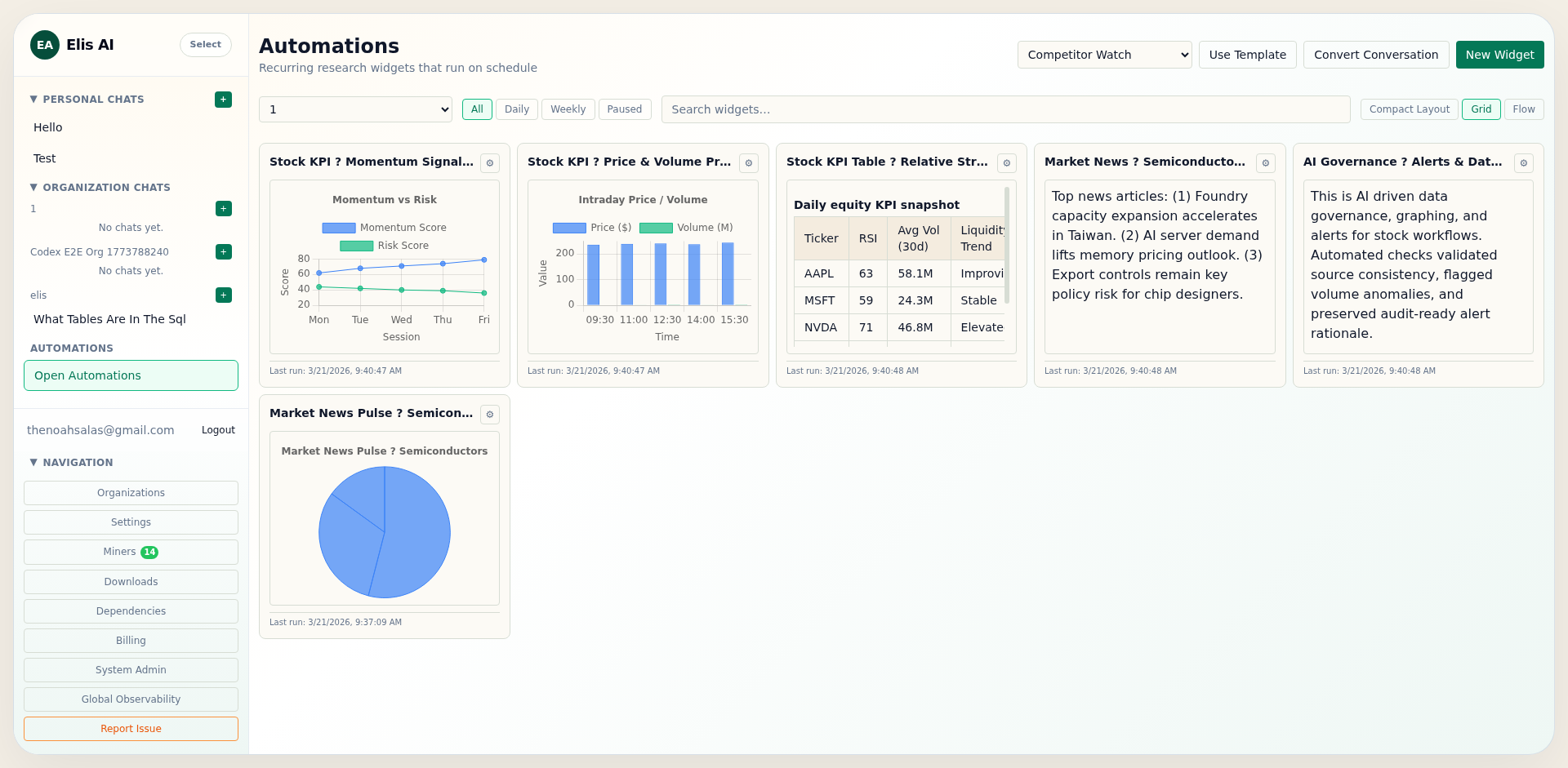
Turn recurring monitoring and internal analysis into exportable reports with visible workflow history.
Apply classification, minimum-clearance access, and compartment-style boundaries where need-to-know access matters.
Ground drafting and synthesis in approved documents, projects, and internal knowledge instead of unmanaged context.
Let customer IT teams connect approved databases, APIs, and supported business applications using providers they trust.
Choose shared, dedicated, or isolated deployment patterns with model governance, source restrictions, and org-owned credentials.
Regulated teams already know AI saves time. Their problem is that they aren't allowed to use it. These are the architectural guarantees that change that answer.
Every prompt, retrieved document, and model response logged in exportable audit trails. Zero blind spots for compliance review.
Zero-trust architecture, dedicated deployment, and BYOK mean IT security reviews the deployment model once — not every workflow.
Domain allowlists, internet disablement, and no-egress deployment options mean data never touches an unapproved network path.
Regulated teams don't need to know AI saves time — they already know. They need to know it passes their security review. These are the controls that make that possible.
Elis responses carry compliance context: clearance levels, boundary enforcement, and full trace visibility. The CCO sees what ran. The CRO sees what touched what data.
| Region | Pipeline | Risk |
|---|---|---|
| North America | $4.2M | Low |
| EMEA | $3.1M | Medium |
| APAC | $2.4M | Elevated |
| Timestamp | User | Action | Model | Data source | Trace ID |
|---|---|---|---|---|---|
| 2026-06-09 09:14:32 | j.miller@firm.com | Automation run — prior auth summary | org-miner-04 | Internal DB · payer-api | trace_a8f2c1 |
| 2026-06-09 09:02:11 | s.chen@firm.com | Document draft — contract clause | shared-miner-12 | Uploaded doc · project-files | trace_b3d7e9 |
| 2026-06-09 08:47:05 | r.patel@firm.com | Research query — ITAR compliance check | dedicated-miner-01 | Approved sources only | trace_c9a4f2 |
Automations run on locked pathways backed entirely by internal ground-truth data. A compliance report generated this week follows the exact same logic as next week's. No model drift, no hallucinations, no undocumented behavior changes.

Refine sensitive documents with approved internal context and visible controls.
Generate audit-ready summaries and recurring reports from governed workflows.
Connect trusted data sources and supported apps chosen by your IT team.
Give compliance, privacy, and ops teams clear audit logs, trace visibility, and evidence trails for recurring workflows.
Support classification labels, minimum-clearance access, and compartment enforcement where sensitive work must stay segmented.
Allow IT teams to connect trusted data sources and supported apps instead of forcing one provider stack across every workflow.
Match controls to risk with internet restrictions, org-owned credentials, dedicated environments, and enterprise governance options.
Each industry page maps firm types, buyer roles, controls, and proof surfaces so teams can evaluate fit quickly.
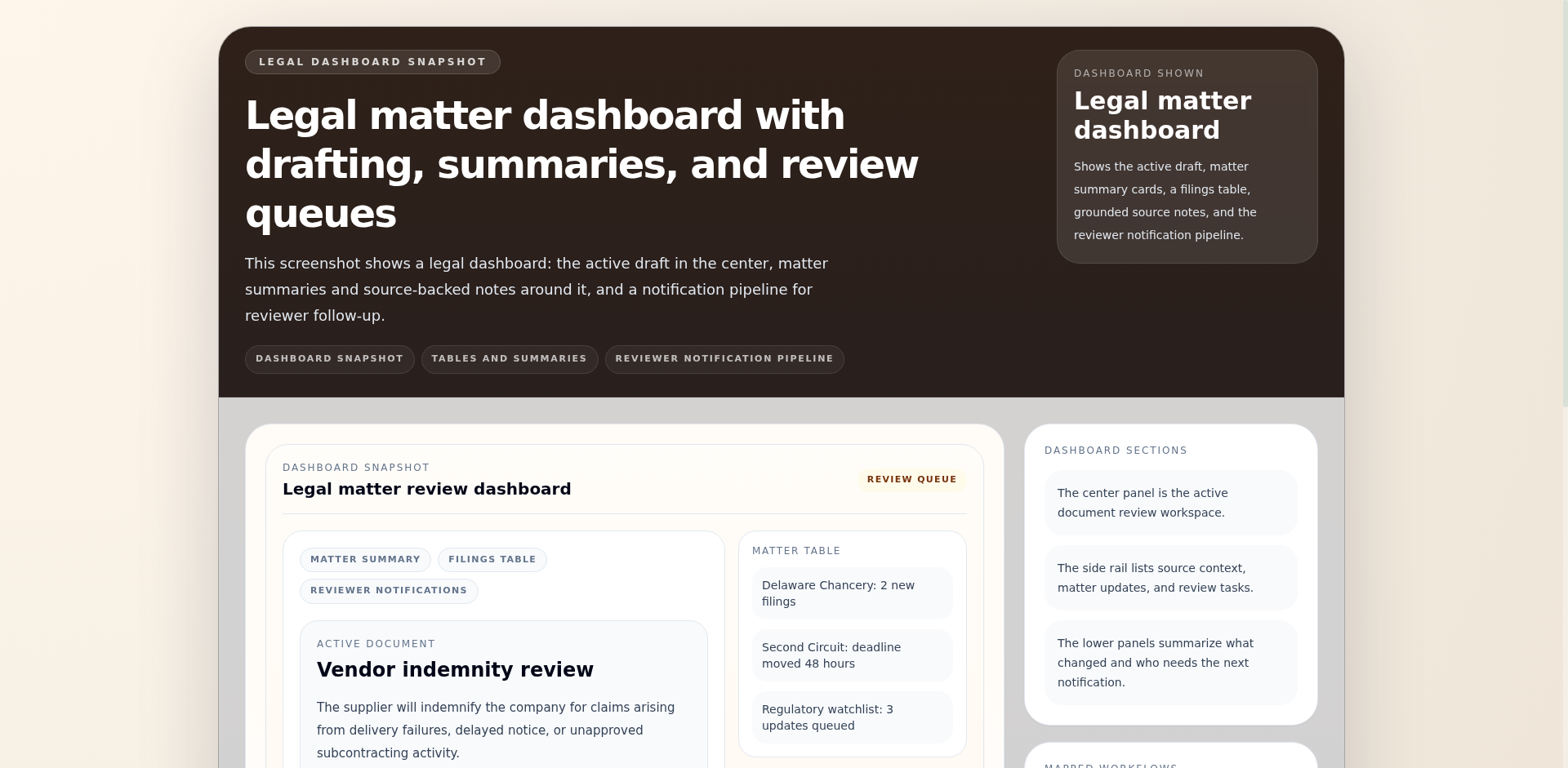
Help partners, paralegals, and legal ops teams monitor matters, draft with internal context, and keep sensitive work inside auditable, matter-scoped workflows.
Cited research, confidential drafting, matter-level controls

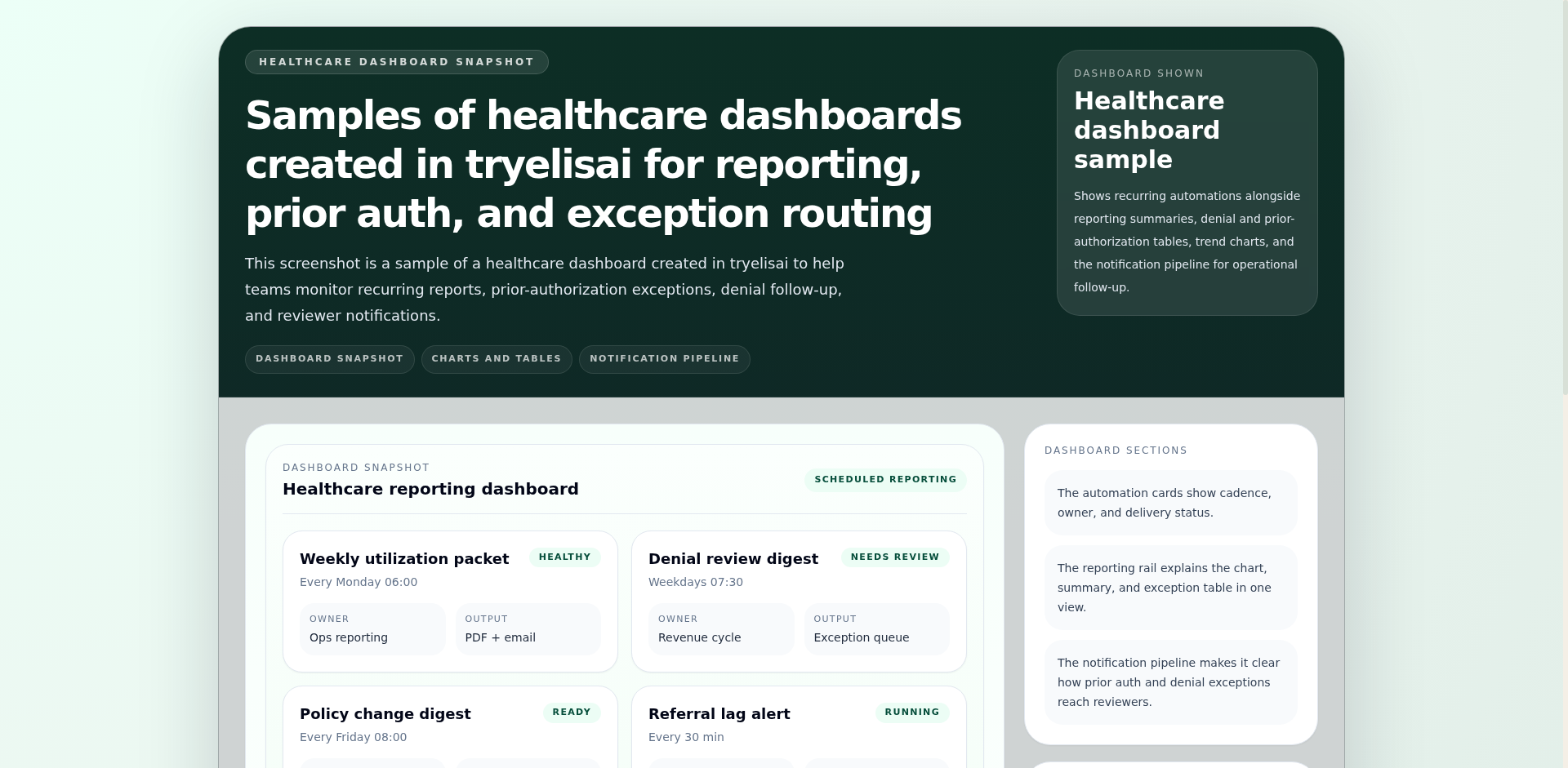
Help compliance leaders, clinical ops teams, analysts, and IT owners build tryelisai dashboards for prior auth status, denial review, reporting cadence, SOP updates, and exception routing without losing deployment control.
Prior auth, denials, recurring reporting, privacy-aware controls

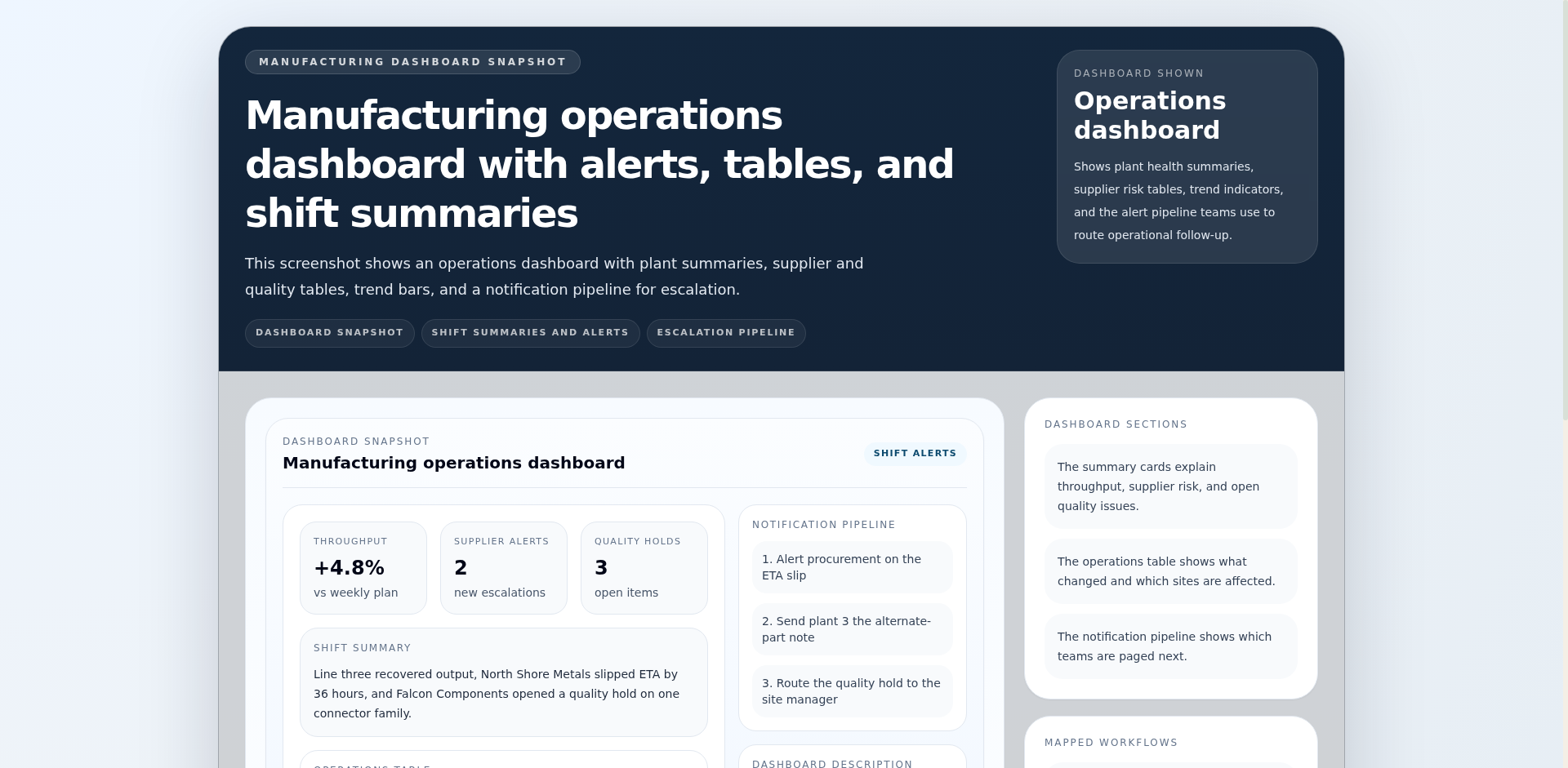
Help operations leaders, quality teams, procurement, and IT or OT owners standardize reporting, refine SOPs, and connect internal systems inside enterprise controls.
KPI reporting, supplier monitoring, connected internal systems

Elis supports the control patterns regulated teams ask for most: approved-source restrictions, auditing systems, clearance-aware access, org-managed integrations, and deployment options that fit stricter boundary requirements.
We help teams design compliant workflows and deployment boundaries. Final certification and control ownership remain with your organization.
Share your environment, compliance requirements, auditing needs, clearance boundaries, and trusted integration stack. We will follow up with deployment options.
Start with product exploration, then scale into enterprise deployment planning with auditability, controlled integrations, and clear access boundaries.